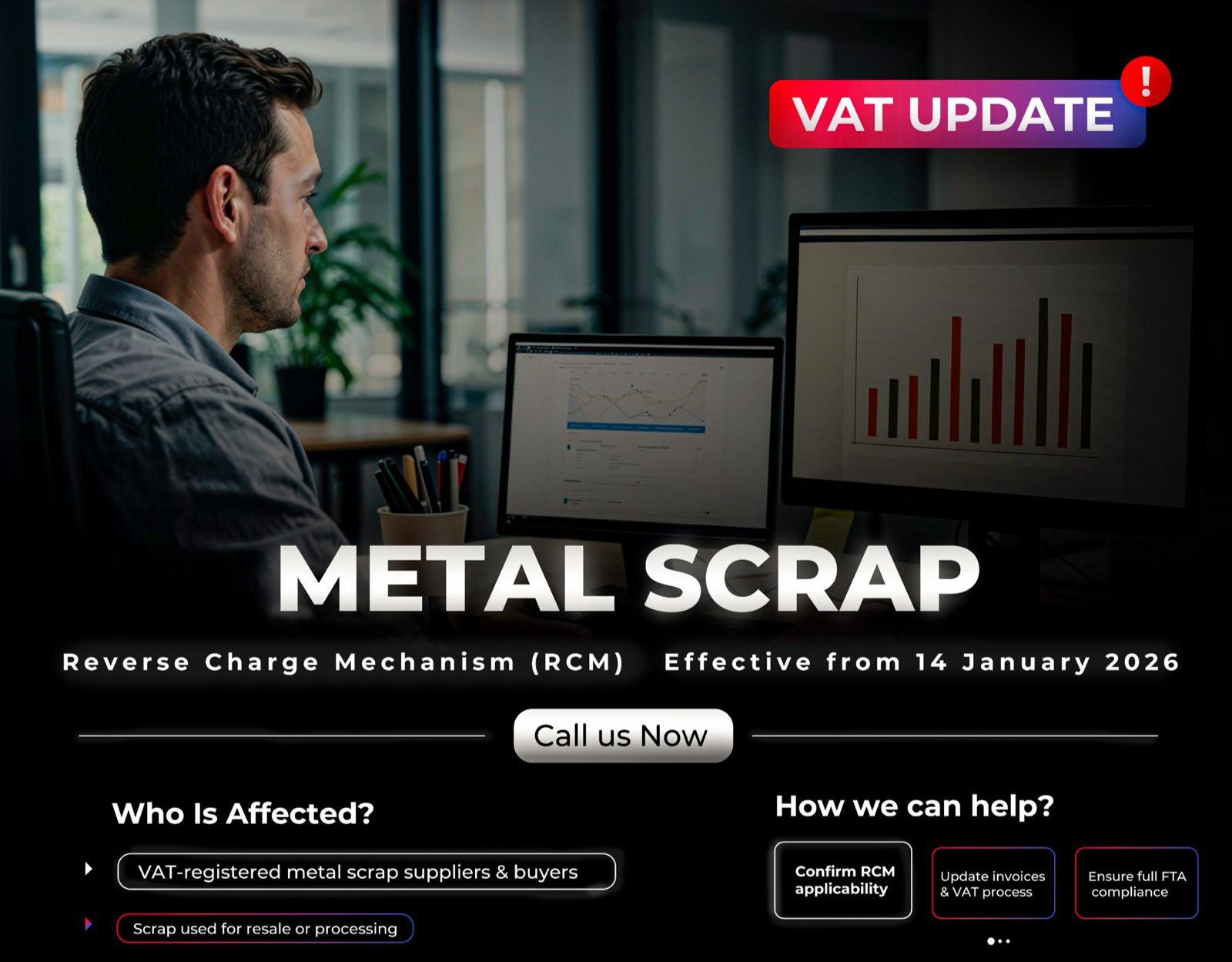
The UAE Cabinet has issued a significant new decision that will reshape how Value Added Tax (VAT) is handled in the metal scrap trading sector. Cabinet Decision No. 153 of 2025, published on November 4, 2025, introduces a reverse charge mechanism for metal scrap transactions between VAT-registered entities, set to take effect on January 14, 2026.
📅 Important Dates
What is the Reverse Charge Mechanism?
Under this new legislation, when metal scrap is supplied between VAT-registered businesses in the UAE, the responsibility for accounting and paying VAT shifts from the supplier to the recipient. This represents a fundamental change in how VAT compliance works for this specific sector.
Key Definition: Metal Scrap
According to the Cabinet Decision, Metal Scrap refers to ferrous or non-ferrous metal waste that has commercial value and can be used following processing. Processing includes operations that convert metal scrap into materials usable in manufacturing new products through repairing, recycling, or other methods.
How Does the Reverse Charge Work?
When a supplier provides metal scrap to a VAT-registered recipient who intends to resell or process the material, the following rules apply:
For the Supplier:
- The supplier is not responsible for accounting for VAT on the metal scrap supply
- The supplier should not report this VAT in their tax return
- The invoice must contain an explicit statement indicating the application of the reverse charge mechanism
For the Recipient (Buyer):
- The recipient becomes responsible for accounting for the due tax on the supply
- The recipient must fulfill all tax obligations resulting from the supply
⚠️ Important Exception
The reverse charge mechanism does not apply if the supply of metal scrap is subject to VAT at the zero rate in accordance with Article 45 of Federal Decree-Law No. 8 of 2017 (such as exports).
Compliance Requirements
To ensure proper application of the reverse charge mechanism, both parties must comply with specific requirements prior to the date of supply:
The Recipient Must:
- Provide the supplier with a written declaration stating that the metal scrap is intended for resale or processing
- Provide the supplier with a written declaration confirming they are registered with the Federal Tax Authority (FTA)
The Supplier Must:
- Receive and retain both declarations from the recipient
- Verify that the recipient is a VAT registrant using the means approved by the FTA
- Ensure the invoice contains an explicit statement indicating the application of the reverse charge mechanism
🚨 Consequence of Non-Compliance
If the recipient fails to provide the required declarations, the reverse charge mechanism will not apply. In such cases, the recipient cannot treat the metal scrap as being used or intended for resale or processing for input tax recovery purposes under Article 54 of Federal Decree-Law No. 8 of 2017.
Why This Change Matters
The introduction of the reverse charge mechanism for metal scrap trading serves several important purposes:
- Fraud Prevention: Reduces the risk of VAT fraud commonly associated with the metal scrap industry
- Cash Flow Management: Suppliers no longer need to pay VAT upfront on transactions with registered businesses
- Compliance Simplification: Streamlines the VAT reporting process for genuine business-to-business transactions
- Industry Alignment: Brings the UAE in line with international best practices in VAT treatment for the scrap metal sector
What Businesses Should Do Now
With the effective date of January 14, 2026 approaching, businesses involved in metal scrap trading should take immediate action:
- Review Current Processes: Examine your existing metal scrap transactions and VAT accounting procedures
- Update Documentation: Prepare template declarations for suppliers and recipients to use
- Train Your Team: Ensure your finance and procurement teams understand the new requirements
- Update Systems: Modify your invoicing and accounting systems to accommodate the reverse charge mechanism
- Verify Registration Status: Establish procedures to verify the VAT registration status of your trading partners
- Seek Professional Guidance: Consult with tax advisors to ensure full compliance with the new regulations
Need Expert Guidance on the New VAT Regulations?
Our team at Essence UAE specializes in UAE tax compliance and can help your business navigate the reverse charge mechanism seamlessly.
We provide comprehensive VAT advisory services, including compliance reviews, process implementation, and ongoing support to ensure your business meets all regulatory requirements.
Contact Essence UAE TodayConclusion
Cabinet Decision No. 153 of 2025 represents a significant development in UAE's VAT framework, specifically targeting the metal scrap trading sector. The reverse charge mechanism aims to enhance compliance, reduce fraud, and streamline VAT processes for business-to-business transactions.
Businesses have until January 14, 2026, to prepare for these changes. Early preparation and professional guidance will be crucial to ensure smooth implementation and continued compliance with UAE tax regulations.
Disclaimer: This blog post is for informational purposes only and should not be considered as legal or tax advice. Businesses should consult with qualified tax professionals regarding their specific circumstances and compliance requirements.